Fire Sprinklers: Why the Water Damage Is Often Far Less Than You Think
One of the most common concerns homeowners and property owners have about fire sprinklers is: What happens to my property when the sprinklers go off?
Nobody wants to replace flooring, drywall, furniture, or belongings because of water damage. But there’s an important part of the equation that is often overlooked: fire sprinklers are designed to stop a fire while it is still small. And when you compare the amount of water used by a sprinkler system with the amount of water typically delivered by firefighters, the difference can be dramatic.
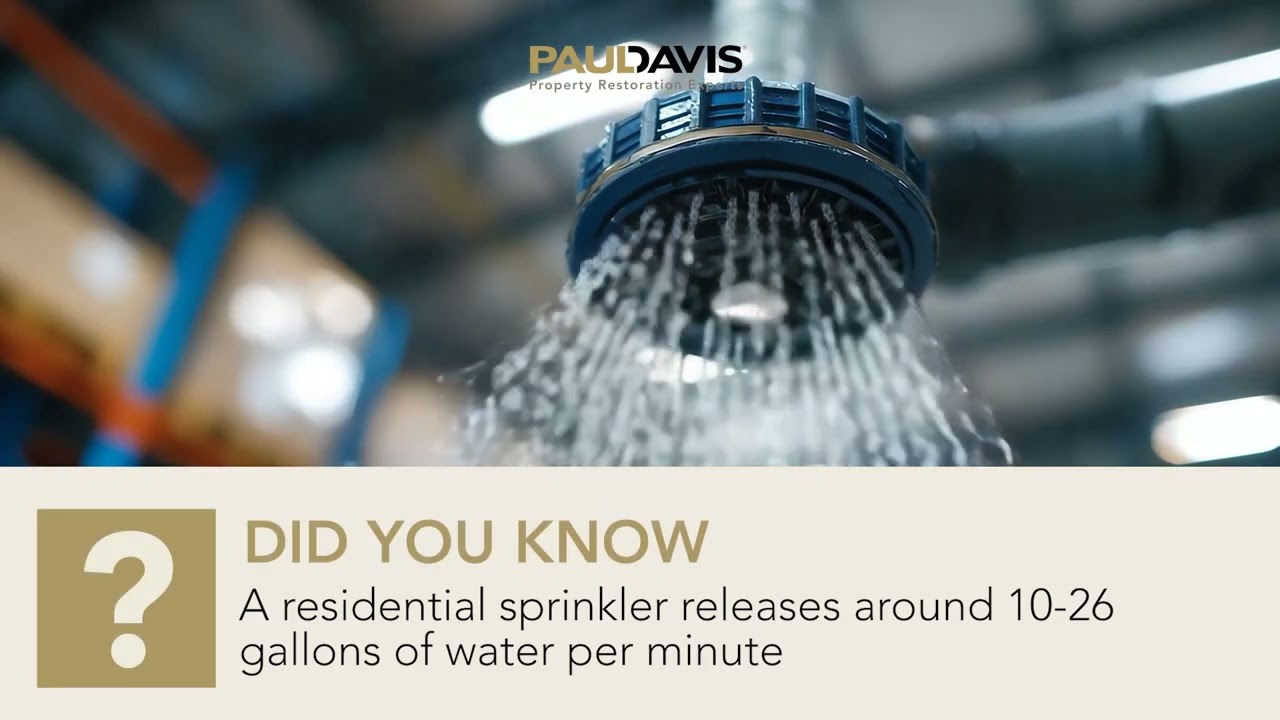
Did you know? A typical residential fire sprinkler head discharges approximately 10 to 26 gallons of water per minute. By comparison, a firefighter hose line can release approximately 150 to 250+ gallons of water per minute.
A sprinkler can often begin controlling a fire with a fraction of the water that may be used once firefighters arrive and attack a larger, more developed fire. The goal isn’t to flood the property, it is to stop the fire before it has the opportunity to grow.
Without sprinklers, a small fire can quickly spread through walls, ceilings, furniture, and other combustible materials. By the time the fire department arrives, firefighters may need substantially more water to contain the larger fire and prevent it from spreading. With sprinklers, the response begins automatically, often before anyone is able to call 911.
Click here to learn about the different types of sprinklers
Less Fire Often Means Less Overall Damage
Fire sprinklers aren’t just about putting out flames, they also limit the size and severity of the fire before it becomes a much bigger problem. When sprinklers are present, property loss per fire is approximately 55% lower in homes and 60% lower in commercial and office spaces.
It’s also important to try and contain the fire to the affected room. Instead of allowing a fire to spread from room to room and potentially destroy an entire home or building, fire sprinklers can help contain the fire to the area where it started. In properties equipped with fire sprinklers, fire spread is confined to the room of origin in approximately 95% of fires.
Sprinkler Misconceptions
What Happens When a Sprinkler Activates?
A common misconception (especially in TV Shows and Movies) is that once a fire starts and one sprinkler activates, that means every other sprinkler head in the building begins spraying water as well. That’s not how properly designed fire sprinkler systems normally operate. In 96% of fires where sprinklers activate, five or fewer sprinkler heads operate.
Sprinklers are individually activated by heat. A sprinkler head responds when the temperature around that specific head reaches its activation point. This means the system typically delivers water directly to the area where the fire is developing rather than spraying the entire building. In fact, sprinklers successfully control or extinguish the fire in approximately 96% of incidents where they activate.
Sprinklers Don’t Prevent Every Loss
They Help Prevent Catastrophic Loss
No fire protection system can guarantee that a property will escape damage completely. But the purpose of a sprinkler system is to trade a potentially devastating fire for a much smaller, more manageable incident.
Fire sprinkler statistics:
- 82% lower risk of dying when working smoke alarms and sprinklers are both present.
- 32% fewer injuries when sprinklers are present.
- 35%–60% lower firefighter injury rates in sprinkler-protected buildings.
- 55% lower average direct property loss in homes with sprinklers.
- 95% of fires in sprinkler-protected properties are confined to the room of origin.
- 96% of sprinkler activations successfully control or extinguish the fire.
- 96% of fires involve activation of five or fewer sprinkler heads.
- 60% lower average direct property loss in commercial and office spaces with sprinklers.
The Bottom Line on Sprinklers
When considering the risks between water damage, fire damage, and safety, it’s important to look at the entire picture. A sprinkler’s job isn’t to protect your property from water at the expense of fire damage. Its job is to use water to put out a fire as early as possible to prevent a fire from becoming a much larger and more destructive event.
A controlled sprinkler response can mean less fire, less heat, less smoke, less structural damage, and most importantly, a much greater chance that everyone gets out safely. In many cases, the sprinkler system is what keeps that small fire from becoming a catastrophic one.
Other articles